

Cold plunging has gone from fringe practice to household fixture in a few short years, and the market has expanded to match. You can now spend a few hundred dollars on an inflatable tub or many thousands on a stainless steel installation with app-controlled chilling. Both get you cold. They are not remotely the same to live with.
Rather than simply ranking products, this guide works through the three decisions that genuinely shape ownership: what the tub is made of, what size you need, and how it stays cold. Get those right and almost any tub will serve you well. Get them wrong and even an expensive one ends up sitting unused under a cover.
Decision 1: Material
Material determines durability, insulation, ease of cleaning and, frankly, how the thing looks in your space. There are four common options.
Stainless steel is the premium choice — the longest-lasting, the most hygienic, and the easiest to keep clean because there is nothing porous for bacteria to sit in. It also looks the part, particularly in the models that pair a steel interior with a cedar exterior. The trade-off is cost and weight.
Cedar barrel tubs look outstanding outdoors and the wood provides a degree of natural insulation. They suit garden settings alongside a sauna especially well. They do need periodic wood care to stay looking their best.
Composite and PVC tubs offer excellent value and very low maintenance. They are less of a design statement, but if the tub lives somewhere practical rather than on display, they make a lot of sense.
Inflatable tubs are the cheapest entry point and pack away when not in use, which matters if you are short on space or unsure whether cold therapy will stick. Expect a shorter lifespan and the least insulation of the four.
If you are testing whether cold therapy suits you at all, an inflatable tub is a sensible, low-risk starting point. If you already know you are committed and the tub will live in one place, stainless steel or a cedar barrel will look better and last considerably longer. Many of the Dynamic Cold Therapy models pair a stainless interior with a cedar exterior, which is a neat compromise between hygiene and warmth of appearance.
Decision 2: Size and Fit
Size is where buyers most often misjudge. Too small and you cannot submerge to the shoulders, which is where much of the benefit sits. Too large and you are paying to chill water you never use — every extra gallon is more work for the chiller and more running cost.
Three things to measure before you buy:
Internal length and depth. Can the tallest person who will use it sit with shoulders under water and legs reasonably extended? This is the number that matters, not the external dimension.
External footprint plus clearance. Allow room for the step, the lid when open, and access to the chiller for filter changes.
The route to the location. Gates, side passages and stairs have defeated more than one delivery. Measure the narrowest point on the way in.
Volume matters more than people expect. Around 100 gallons is a common sweet spot for one adult — comfortable, but not so large that cooling becomes slow and expensive. Larger tubs are lovely if two people plunge together, but understand the running implications before committing.
Placement deserves real thought too. Indoors needs drainage and a floor that tolerates splashing. Outdoors is the more popular choice, especially next to a sauna — our guide on combining heat and cold in one setup is worth reading if you are planning both.
Decision 3: The Chiller
This is the component that separates a plunge you use daily from one you use occasionally, and it is the part most first-time buyers underestimate.
Without a chiller, you are buying ice. That is genuinely viable — plenty of people start that way — but it means a trip to the store, bags of ice, and a tub that warms up within a day or two. It works, and it costs nothing up front. It also quietly becomes the reason people stop.
A chiller changes the equation completely. It holds your water at a set temperature continuously, so plunging becomes a two-minute decision rather than an hour of preparation. Most units also filter and sanitise, which keeps the water clear for weeks rather than days.
What to look for: capacity in gallons that comfortably exceeds your tub volume; horsepower appropriate to how fast you want it to cool and recover between sessions; multi-stage filtration to keep water usable longer; ozone or similar sanitation to reduce how often you drain and refill; and app control for scheduling and checking temperature before you head out.
Broadly, a smaller chiller suits modest tubs and mild climates, while higher-output units are the right call for larger volumes, hot summers, or households where several people plunge in a day. Both Dynamic Cold Therapy and Penguin Chillers offer plug-and-play systems, and you can also browse standalone chillers if you already have a tub.
Three Cold Plunges Worth Considering
Here are three in-stock options spanning the range — a low-commitment starting point, a mid-range barrel, and a premium stainless installation. Each links through to full specifications.
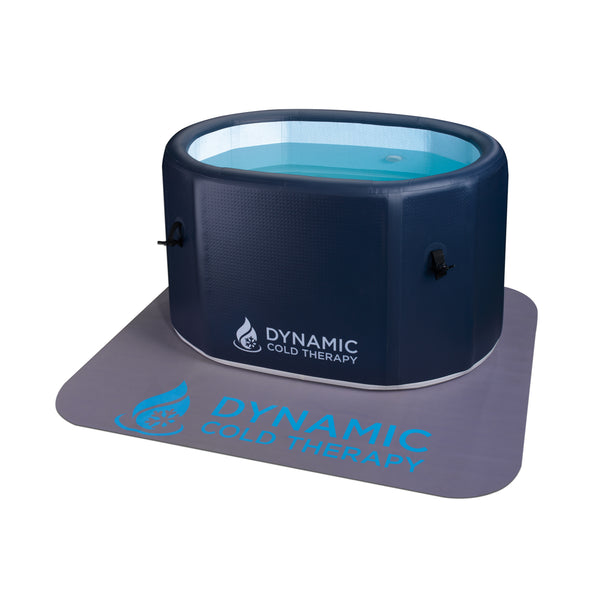
Dynamic Cold Therapy Inflatable Oval Cold Plunge — DCT-IO-052
The sensible way to find out whether cold therapy is going to stick. Portable, puncture-resistant, and generously sized at 52 inches long so you can actually submerge properly. Packs away when not in use, and a WiFi-enabled chiller can be added later.
If you want something permanent that still suits a garden setting, a barrel tub hits the balance between looks and cost.
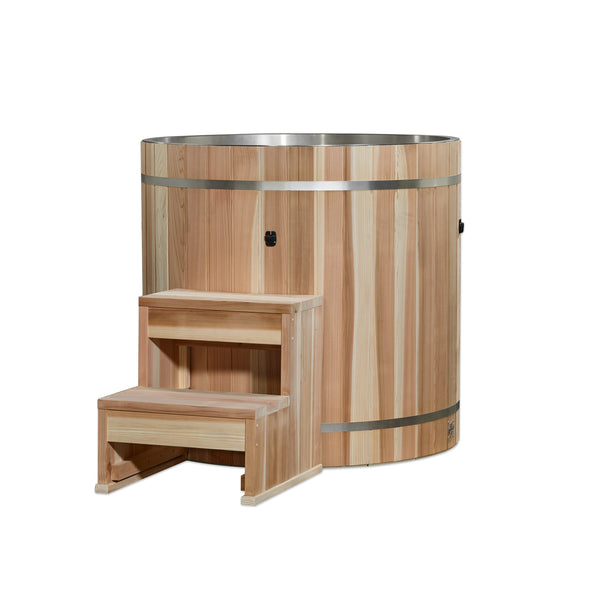
Dynamic Cold Therapy Barrel Stainless Steel Cold Plunge — DCT-B-042-SSPC-34
A stainless interior wrapped in a cedar barrel exterior, so you get the hygiene and longevity of steel with a look that belongs outdoors beside a sauna. Includes a step, suits indoor or outdoor placement, and takes an optional WiFi-enabled chiller.
And at the premium end, a full stainless installation is the one you buy once.
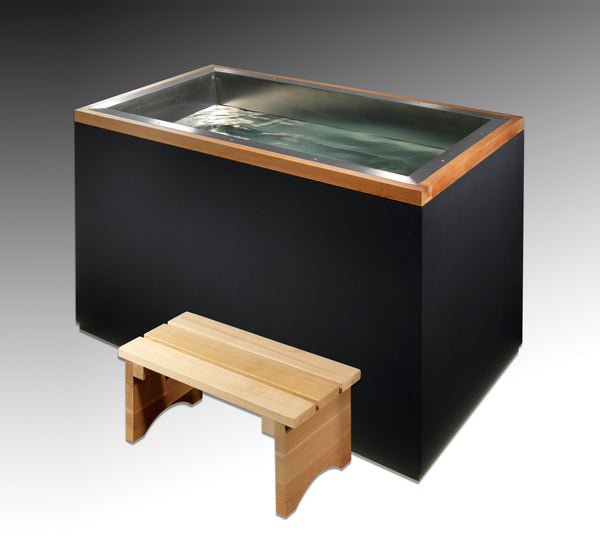
Dynamic Cold Therapy "CUBOID" 304 Stainless Steel (XL) — DCT-S-055-NS-34
The extra-large Cuboid pairs a 304 stainless interior with premium cedar and stainless exterior detailing. Ergonomic proportions for genuine full submersion, a custom cover with child safety latches, and an optional WiFi-enabled chiller with app temperature control.
Matching the Tub to How You Will Use It
Testing the water. An inflatable tub with ice, no chiller. Minimal outlay, and you will know within a month whether this is a habit or a phase.
Committed home user. A composite or barrel tub around 100 gallons with a matched chiller. This is the configuration most people end up happy with long term.
Full backyard setup. A stainless or cedar-clad tub sited beside an outdoor sauna cabin, with a higher-output chiller and a proper surround. This is the version that reads as a genuine home spa — and it is worth building in stages rather than all at once.
Running Costs and Upkeep
A chiller draws power continuously to hold temperature, though a well-insulated tub with a good cover dramatically reduces that load. The cover is not an accessory — it is the single cheapest efficiency upgrade you can make, and it keeps debris out at the same time.
Maintenance is straightforward: rinse filters regularly, keep the water treated, and drain and refill periodically depending on use and your sanitation system. Wooden tubs need occasional exterior care. None of it is onerous, but building it into a routine keeps the water inviting — and inviting water is what keeps you plunging.
Still weighing the investment? Our piece on whether a home plunge earns its place is a useful reality check, and the accessories guide covers covers, steps and water care in detail.
Frequently Asked Questions
What temperature should a cold plunge be?
Most people settle somewhere around 45–55°F. Beginners often start warmer and work down over several weeks. Colder is not automatically better, and there is no need to chase extreme numbers.
Do I need a chiller, or is ice enough?
Ice works and costs nothing up front, but the effort tends to erode consistency. If you intend to plunge regularly, a chiller is usually the difference between a lasting habit and an occasional novelty.
Can a cold plunge go indoors?
Yes, provided you have suitable flooring, drainage and ventilation. Outdoors remains more common, particularly alongside a sauna where the hot-cold cycle is the point.
How long should a cold plunge session last?
Even one to three minutes is meaningful. Start short and build gradually rather than pushing through genuine distress. If you have a heart condition, high blood pressure, or are pregnant, speak to your doctor before starting cold immersion.
The Bottom Line
The best cold plunge tub is the one you will actually get into on a cold Tuesday morning. That usually comes down to three things: a material that suits where it lives, an internal size that lets you submerge comfortably, and a chiller that removes every excuse. Start modest if you are unsure, and upgrade once the habit is real. Ready to compare? Browse the full cold plunge collection and filter by type and price to find your fit.