

A cabin sauna is the model most people picture when they imagine a backyard sauna: a square or rectangular structure with a pitched or flat roof, a proper door, and enough headroom to stand up in. It looks like a small building because, structurally, it is one. That shape is the reason cabin saunas hold heat well, seat more people comfortably than a barrel of the same footprint, and blend into a garden or patio without looking like a novelty item.
Prices in 2026 run from just under $5,000 for a well-built two-person kit to well past $30,000 for an architect-designed luxury build. This guide breaks the category down by size and by price band, so you can work out which tier you actually need before you start comparing individual models.
What Counts as a Cabin Sauna
Cabin saunas — sometimes sold as cube saunas, garden saunas, or simply outdoor sauna kits — share a few defining traits:
- Vertical walls and a flat floor. Benches can run the full length of both side walls, and you can walk around inside rather than shuffling along a curved surface.
- Full standing height. Most quality models give you 6'2" or more of interior height, which matters more than buyers expect on the first cold morning.
- A real roof system. Shingled or membrane roofs with drip edges shed water away from the walls, which is the single biggest factor in how a sauna ages outdoors.
- Modular kit assembly. Nearly all cabin saunas ship as pre-cut kits that two people can assemble in a day without specialist tools.
The practical distinction from a barrel is heat distribution. A barrel circulates heat efficiently in a small volume, but the curved walls limit bench placement. A cabin heats a slightly larger air volume and takes a few minutes longer to reach temperature, then holds that temperature more evenly from floor to ceiling because the upper bench sits in a proper heat pocket.
How Much Should a Cabin Sauna Cost in 2026?
Four price bands cover almost everything on the market:
- $4,500 – $6,000: Two-person cube kits in thermally modified spruce, with a glass front, basic LED lighting, and a heater sold separately or bundled. This is the entry point for genuine Nordic-built quality.
- $6,000 – $8,000: Three and four-person cabins. Longer benches, bigger heaters, upgraded glass, and roof kits included. Best value per square foot in the whole category.
- $8,000 – $20,000: Larger family cabins, changing-room layouts, and premium cladding options.
- $25,000+: Architectural luxury builds with hardwood or panel cladding, panoramic glazing, and commercial-grade heating. These are design pieces as much as saunas.
Below $4,500, you are usually looking at thin softwood, uninsulated panels, or a heater too small for the cubic footage — all three cost more to live with than they save at checkout.
Best Cabin Sauna for Two People
Two-person cabins suit couples, small yards, and anyone who wants daily use rather than weekend entertaining. Look for at least 1.5" wall thickness and a heater rated for the full interior volume with headroom to spare.
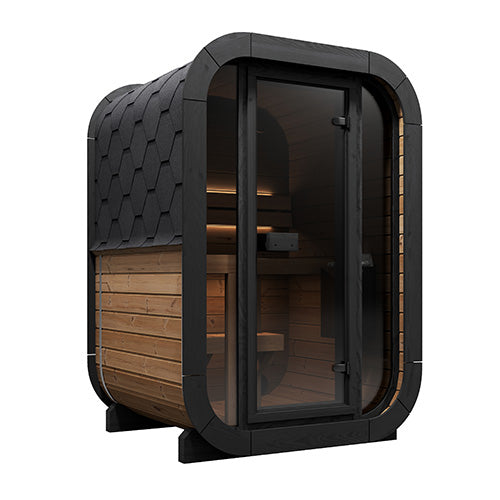
SaunaLife CL3G Cube-Series Outdoor Sauna Kit — 2 Person
A full-glass front on a Thermo-Spruce cube, handcrafted in Northern Europe. The thermally modified spruce lasts roughly 1.5 times longer than Western Red Cedar outdoors and resists the seasonal expansion that pulls cheaper kits apart. Contoured benches and Thermo-Aspen backrests make it comfortable for long sessions rather than just short ones.
Best Cabin Sauna for Three to Four People
This is the sweet spot of the category. A three or four-person cabin gives you a full-length upper bench you can lie down on, which changes the experience completely — most people who buy a two-person model and later regret it name the missing lay-down bench as the reason.
Expect to pay between $5,900 and $7,000 for a well-specified Cube or Garden-series kit at this size, and a good deal more if you move into panel-clad or hardwood territory. If you want the design-led end of the range, our high-end backyard sauna range covers models built to architectural specification.
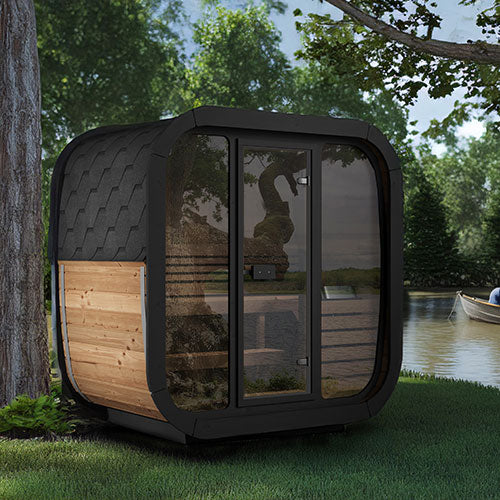
SaunaLife Model CL4G Cube-Series Outdoor Sauna Kit — Up to 3 Persons
The step up from the CL3G, and the size most buyers should be looking at. Thermo-Spruce construction with a bronze-tinted 8mm tempered glass front and app-controlled LED lighting, sized for three bathers with enough bench length to stretch out. It sits right in the value sweet spot of the whole cabin category.
Best Cabin Sauna for Families and Groups
Once you get past four people, two things change. Heater sizing stops being a formality — you need 8kW or more for most six-person cabins — and the electrical supply becomes the limiting factor in the whole project. Plan the circuit before you plan the pad.

Thermasol Nordic Misty Outdoor Traditional Sauna — 2-6 Person
Dark Nordic spruce with a moody misty finish, scaling from two bathers up to six. The wide capacity range is the point: the bench layout works for a solo evening session and still absorbs a full family on a weekend without anyone perching on the edge. Built for authentic high-heat steam, not a compromise dual-purpose unit.
What Actually Drives the Price
Four things account for most of the gap between a $5,000 cabin and a $15,000 one:
- Wood species and treatment. Thermally modified spruce and aspen cost more than untreated hemlock because the heat-treatment process removes the sugars and moisture that cause rot and movement. That process is the difference between a sauna that looks the same in year eight and one that doesn't.
- Glazing. A tempered full-glass front wall can add well over $1,000 to a build. It also transforms how the space feels, which is why so few buyers regret it.
- Heater and controls. A Wi-Fi controllable heater with an external control panel costs meaningfully more than a basic built-in dial. If you want the sauna hot when you get home, this is where the money goes. Compare specifications across the electric heater options for home saunas before assuming the bundled unit is the right one.
- Roof and drainage detail. Shingle kits, drip edges, and vented ridge lines are unglamorous and add hundreds of dollars. They are also the reason some outdoor saunas last twenty years.
Installation, Foundations, and Running Costs
A cabin sauna needs a level, load-bearing base: a concrete pad, compacted pavers, or a reinforced deck rated for the assembled weight plus occupants. Leave a few inches of clearance around the perimeter for airflow, and keep the door swing clear of prevailing wind.
Electrically, most cabin saunas in the 6kW to 9kW range need a dedicated 240V circuit sized by a licensed electrician. Budget for that work separately — it is frequently the largest unexpected line item in the project.
Running costs are lower than most people assume. A 6kW heater drawing full power for a 45-minute heat-up and a 45-minute session uses roughly 6 to 7 kWh, though real-world consumption is lower because the heater cycles once it reaches temperature. At average US electricity rates, that lands in the region of a dollar or two per session.
Frequently Asked Questions
How long does a cabin sauna take to heat up?
Typically 30 to 50 minutes with a correctly sized heater, depending on outdoor temperature and insulation. Undersized heaters are the usual cause of hour-plus heat-up times.
Can a cabin sauna be used in winter?
Yes. Thermally modified wood and insulated wall construction are specifically designed for freeze-thaw cycles, and winter is when most owners use their sauna most.
Do I need planning permission for a backyard sauna?
Rules vary by municipality. Many jurisdictions exempt detached structures below a certain floor area, but setback distances from property lines and electrical permitting almost always apply. Check locally before you order.
Cabin or barrel — which heats faster?
A barrel usually reaches temperature slightly faster because there is less air volume and no unused corner space. A cabin holds heat more evenly and seats people more comfortably once it is up to temperature.
How many people can a "4-person" sauna really seat?
Four seated adults, comfortably. It will not seat four people lying down. If two people want to lie flat at the same time, size up.
The Bottom Line
For most homeowners, the honest answer sits in the middle of the range: a three or four-person cabin between $5,900 and $7,000, with a properly sized heater and a full-glass front. Two-person cubes like the CL3G make sense for compact yards and daily solo use, and they are the best-value genuine Nordic build under $5,000. At the top end, panel-clad and hardwood models from Thermasol are buying you architecture and materials rather than a better sweat.
Whatever tier you land in, spend the money on wood treatment, roof detail, and heater sizing before you spend it on extras. Browse the full range of backyard sauna cabins and kits, and pair your build with the right sauna gear and essentials so it is usable from day one.